
BACK
TO TOP
28 Apr 2026
From navigating without GPS to exploring new ways to power equipment in the field, students took on complex defence technology challenges through the Young Defence Scientists Programme (YDSP).
Over the past year, more than 450 students from 19 schools dived deep into emerging fields such as artificial intelligence, robotics, cybersecurity, unmanned systems and quantum technologies – working alongside engineers and scientists from the Defence Science and Technology Agency (DSTA) and DSO National Laboratories.
The YDSP Congress marked the culmination of that journey, bringing together students, educators and mentors to showcase work shaped by months of experimentation, iteration and research during attachments and camps.
During the opening address, Guest-of-Honour Senior Minister of State for Defence Zaqy Mohamad spoke about the importance of nurturing the next generation of talent amid rapidly evolving technological change.
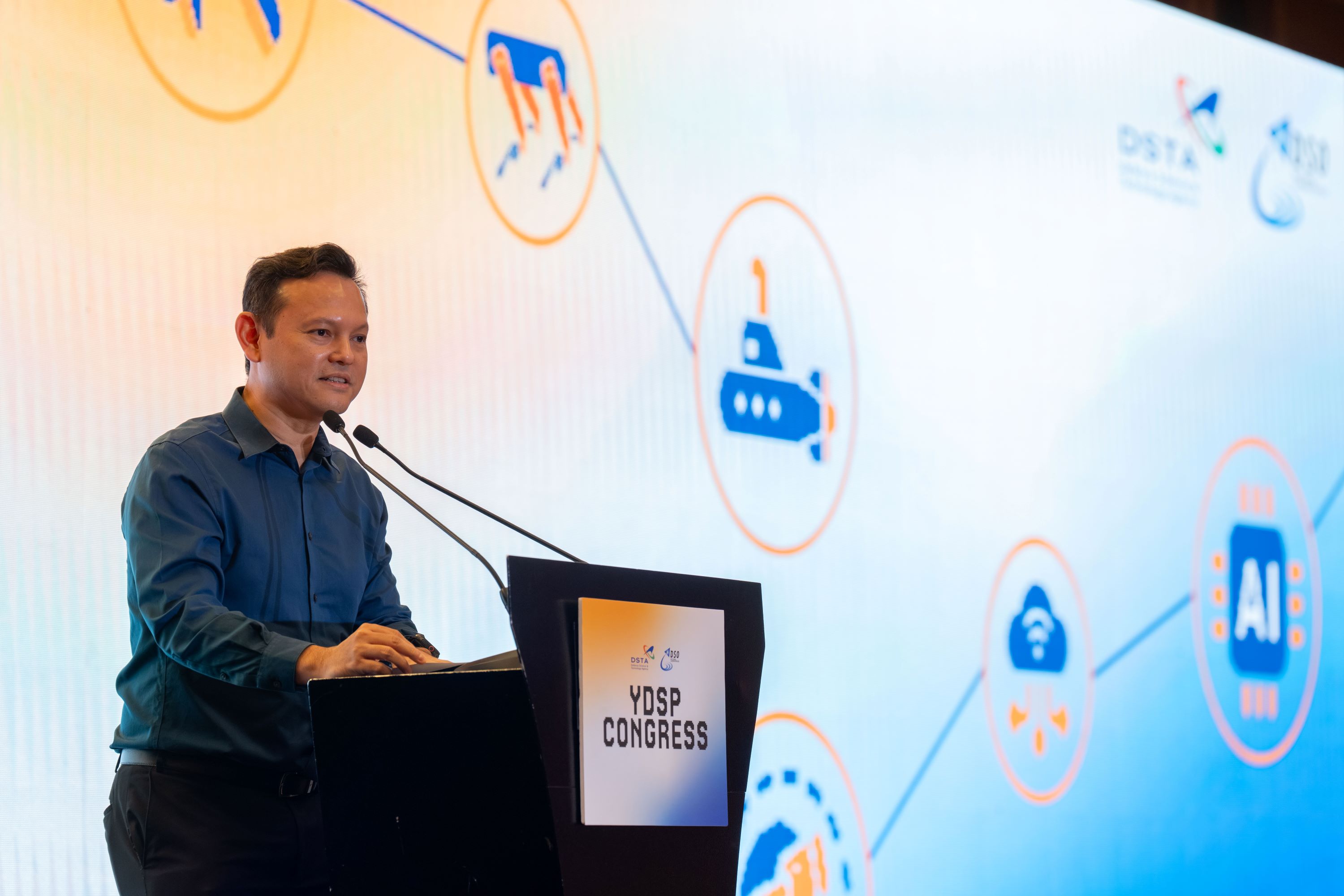
In his address, SMS Zaqy underscored the importance of investing in young talent, noting that the future of Singapore’s defence capabilities will depend on a strong pipeline of scientists, engineers and innovators.
One student team took to the stage to present their project developed during a Research@YDSP attachment with DSTA, sharing how they approached technical challenges through testing, simulation and experimentation.
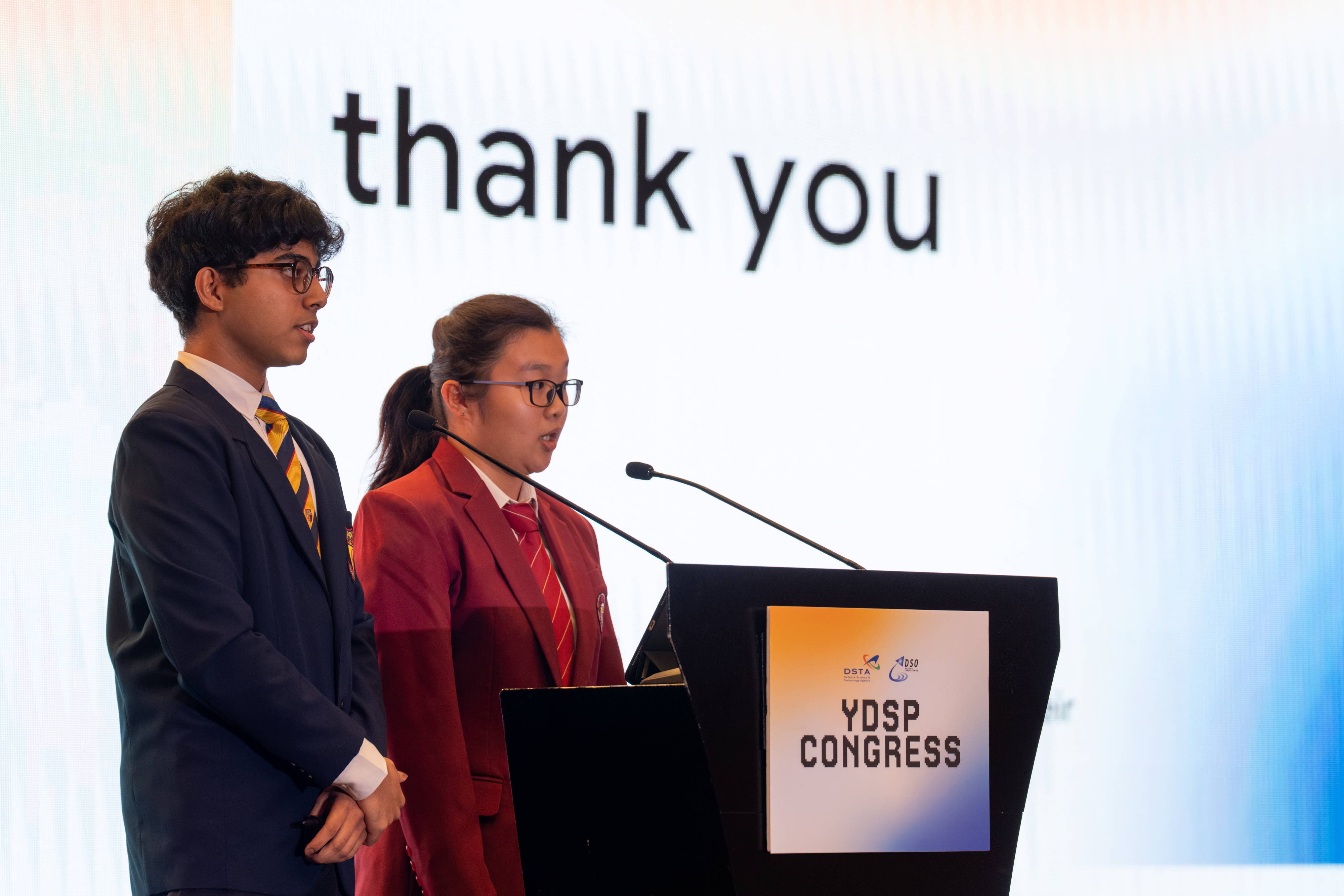
Arkin Talukdar from Anglo-Chinese School (Independent) (left) and Bernice Chang from Victoria Junior College (right) presented their work on improving drone interception accuracy – they modified existing guidance algorithms and conducted more than 100 simulations to evaluate performance across varying conditions.
During the exhibition tour, student teams presented their projects to SMS Zaqy, sharing the technical challenges and discoveries that shaped their experiences at YDSP.
Among them were Jasmine Cao from Raffles Institution and Joshua Ong from Hwa Chong Institution, who explored alternative energy solutions for soldiers operating in the field.
During their attachment with DSTA, the pair evaluated green energy technologies such as direct methanol fuel cells and metal-air batteries across performance, efficiency and operational feasibility. They also designed and built an aluminium-air battery prototype with a 3D-printed housing using accessible materials.
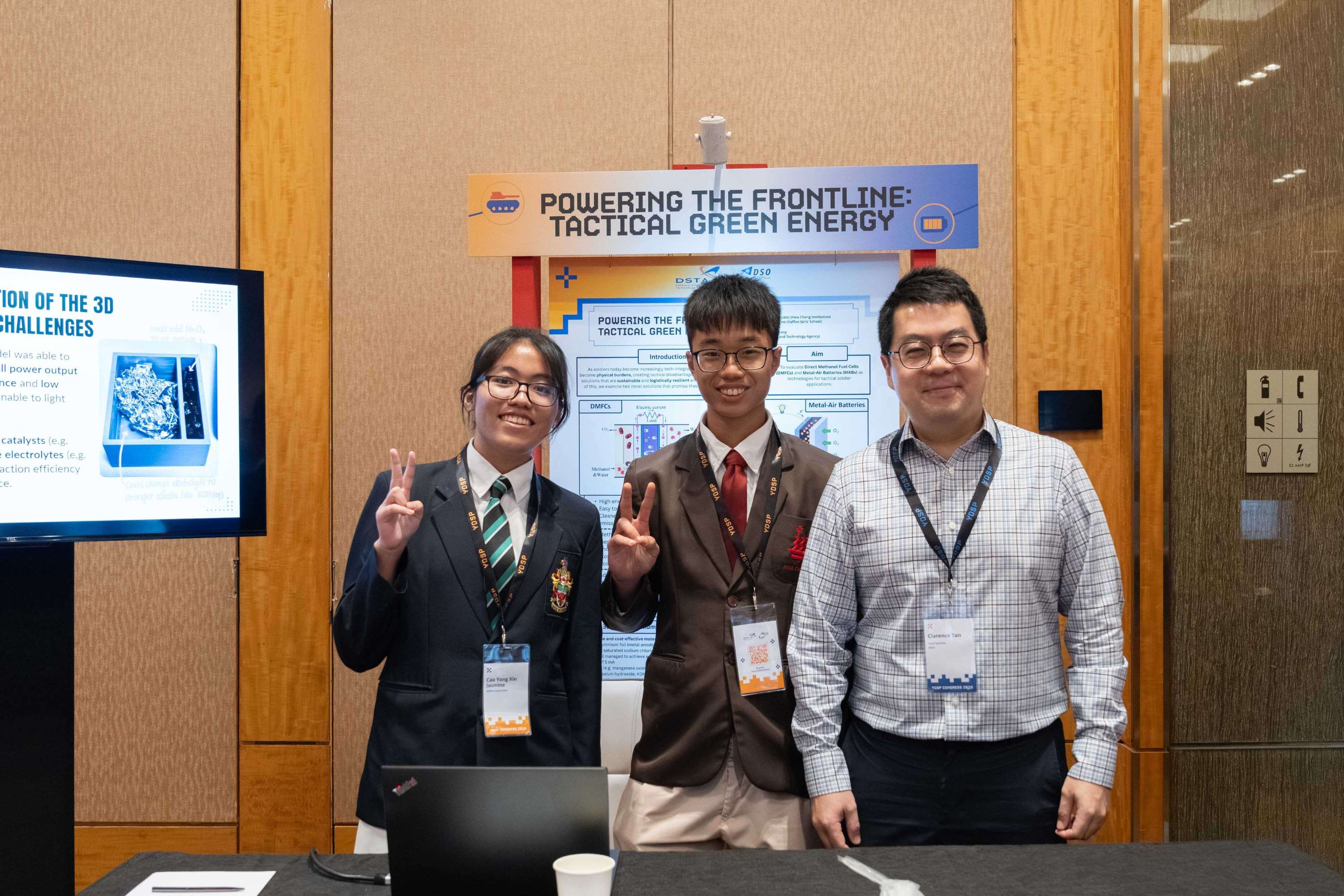
Guided by their mentor Clarence Tan (right) from Land Systems Programme Centre, Jasmine Cao (left) and Joshua Ong (centre) refined and rebuilt their prototype through multiple rounds of testing, gaining first-hand insight into the persistence and precision required in engineering research.
Students from the Science & Technology Camp also showcased their projects. Through hands-on activities in areas such as artificial intelligence, cybersecurity, unmanned systems and robotics, participants gained practical experience applying STEM concepts to engineering challenges.
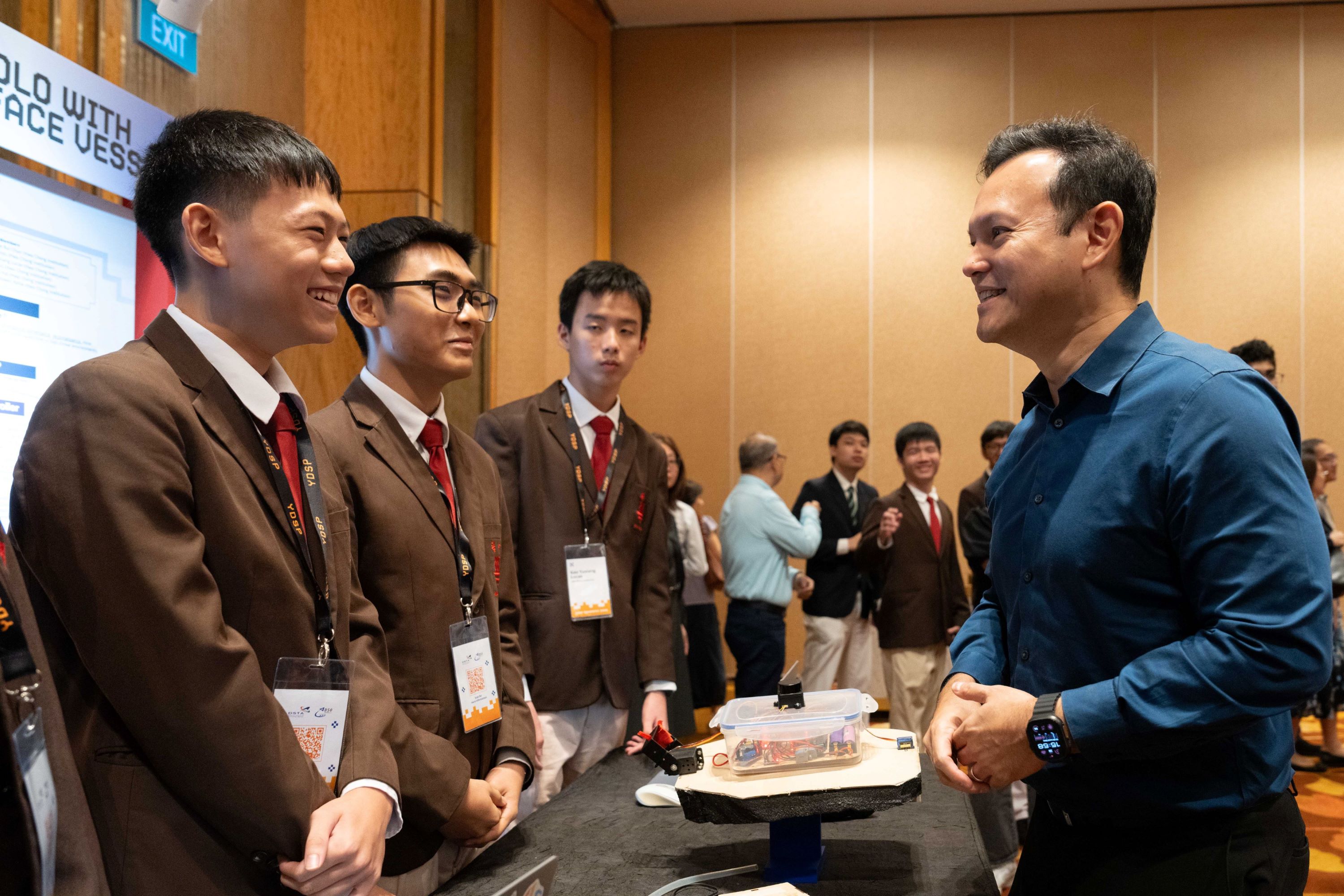
The students shared how building an autonomous vessel required them to think beyond individual components – learning how navigation systems, sensors and control mechanisms must work reliably together under mission conditions.
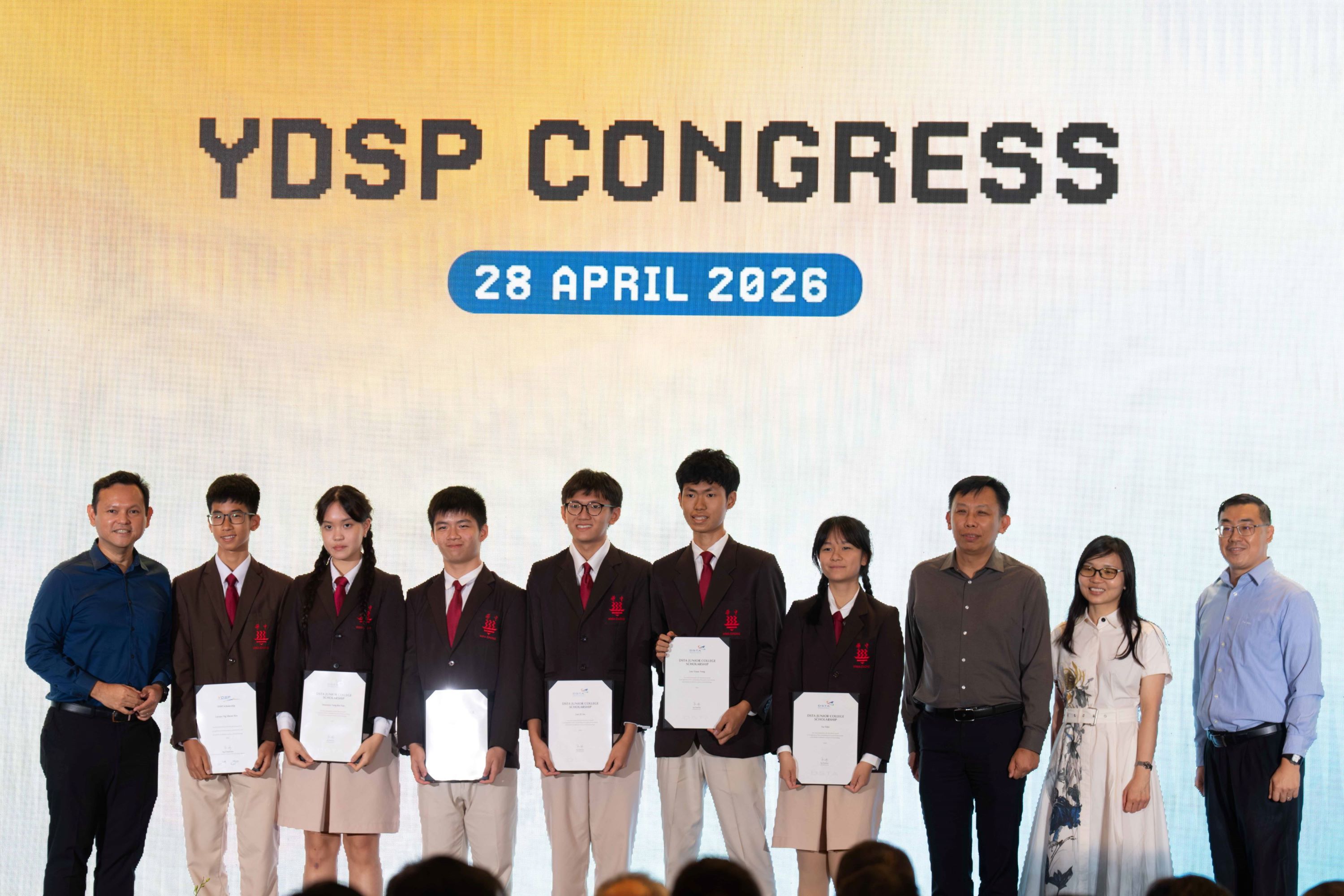
The congress also recognised students for their achievements and potential in STEM. During the ceremony, SMS Zaqy presented 30 YDSP Scholarships and 35 DSTA Junior College Scholarships to students who demonstrated strong academic performance and a passion for science and technology.
Established in 1992, YDSP gives students early exposure to the demands and possibilities of defence science and technology – from tackling open-ended problems to working alongside engineers and researchers at the forefront of emerging technologies.