
BACK
TO TOP
30 Jan 2026
On 30 January, Minister for Defence Mr Chan Chun Sing officiated the opening of MINDEF’s first land-based solar deployment at Sembawang Air Base (SBAB). DSTA worked hand-in-hand with MINDEF/SAF counterparts to conceptualise and deliver the solar farm, optimising land use for renewable-energy generation while factoring in developmental constraints, operational needs and flight safety requirements.
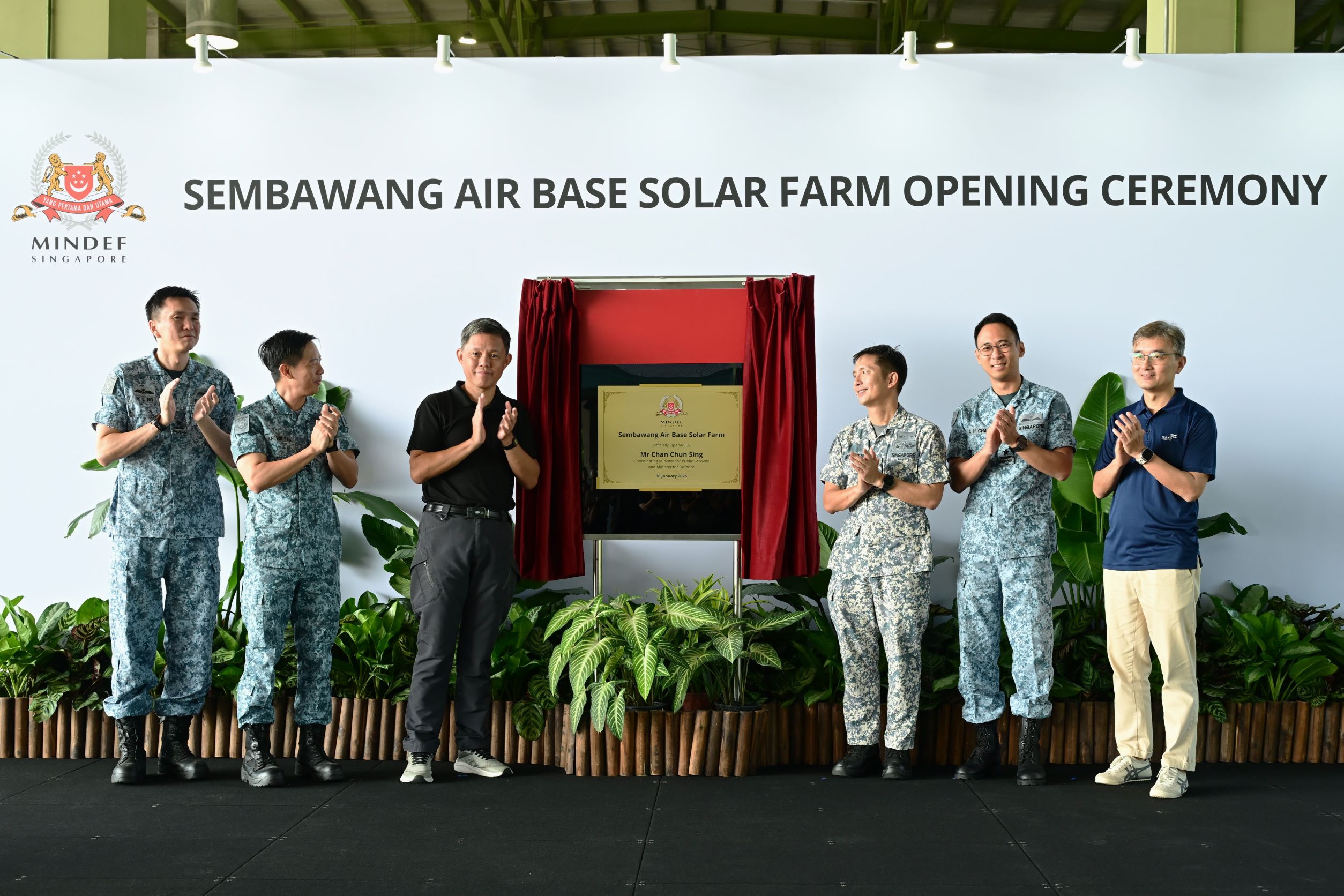
Minister for Defence Mr Chan (third from left), accompanied by Deputy Chief Executive (Strategic Development) Lee Eng Hua (first from right) and MINDEF/SAF senior leadership unveiling the SBAB Solar Farm Opening plaque.
“We conducted a glare analysis study to determine the optimum height and angle of the solar panels, so as to prevent the solar panels from causing visual interferences to the RSAF pilots and air traffic control tower operations. The mounting structures are structurally reinforced and anchored 20% deeper than typical solar farm to ensure aviation safety for nearby flying operations. The solar panels are also designed to be removeable should there be a need to use the space for operational purposes,” said Deputy Head (Energy and Power) Lim Jun Rong from Building and Infrastructure Programme Centre.
With the completion of installation of solar panels on rooftop-based deployment in SBAB by end 2026, the solar farm will generate sufficient clean energy equivalent to powering close to 4,700 four-room HDB flats annually and potential cost savings of approximately $1.9 million a year. This also marks the successful achievement of 50-megawatt peak of solar deployment to date, contributing towards the nation’s sustainability targets under the Singapore Green Plan 2030.
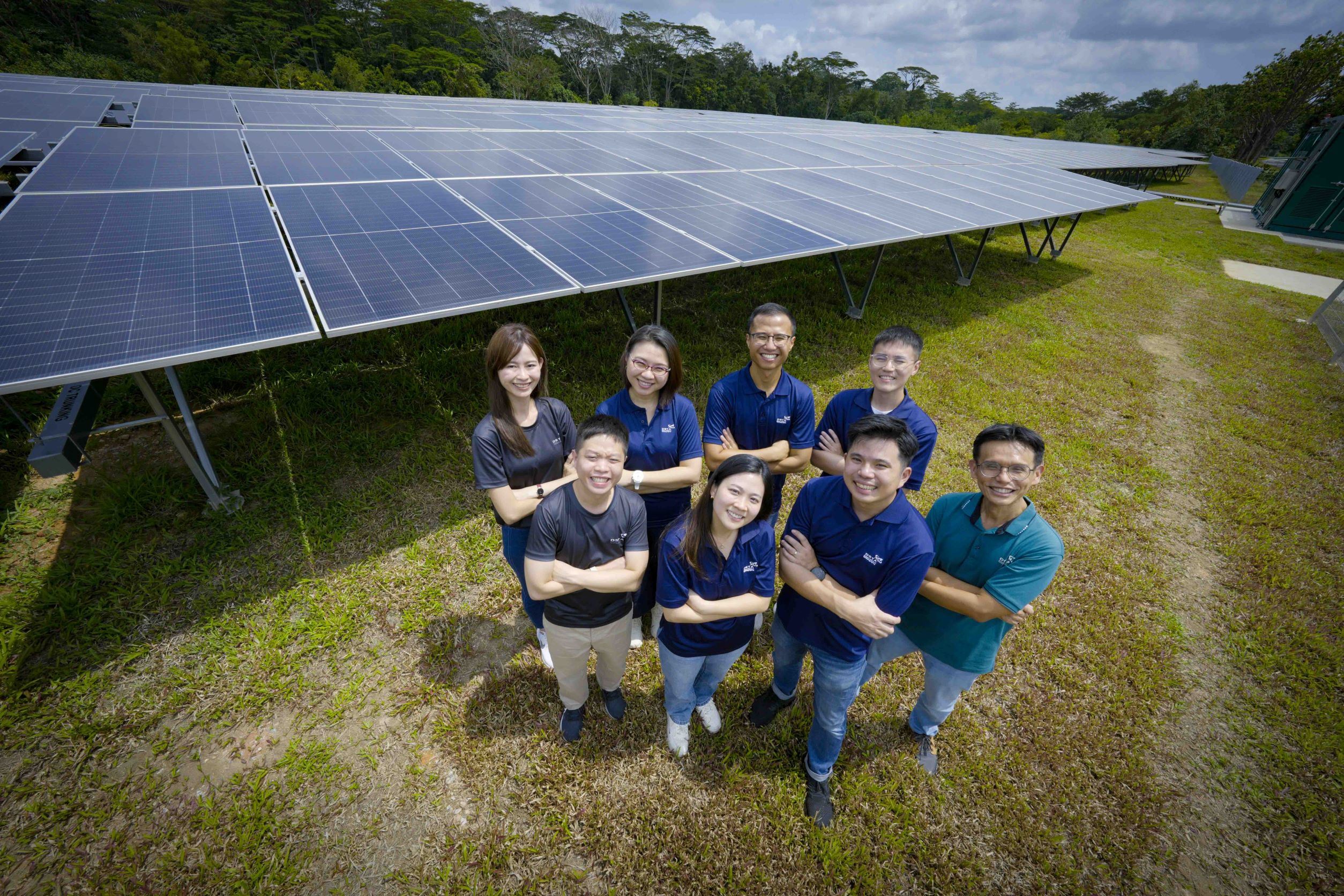
Jun Rong (back row, second from right) and team at one of the solar farm sites in SBAB.
Beyond the solar farm, DSTA also worked with MINDEF/SAF on other environmental initiatives aimed at minimising energy and water consumption while improving operational efficiency. The Smart Utilities Metering System (SUMS) collects near real-time consumption data from SAF facilities to monitor and manage utility consumption. Unlike commercial and residential buildings with stable and predictable usage patterns, SAF facilities operate at varying intensities depending on the type and purpose of building. Apart from administrative buildings, there are also periodic surges during training or exercises, including night time operations. This variability means conventional baselines or anomaly-detection methods often fail to identify genuine issues or generate false alarms.
“To tailor SUMS for the SAF’s unique needs, we conducted a pilot in 2022 across 150 buildings in camps and bases to study consumption patterns and data. The command level dashboard provides strategic overview, while the building level dashboard offers features like anomaly detection for day-to-day management of consumption. When threshold is exceeded, alerts notify building owners so anomalies like leaks or spikes can be detected and resolved faster,” said Deputy Head (Automation) Gary Goh from Building and Infrastructure Programme Centre.
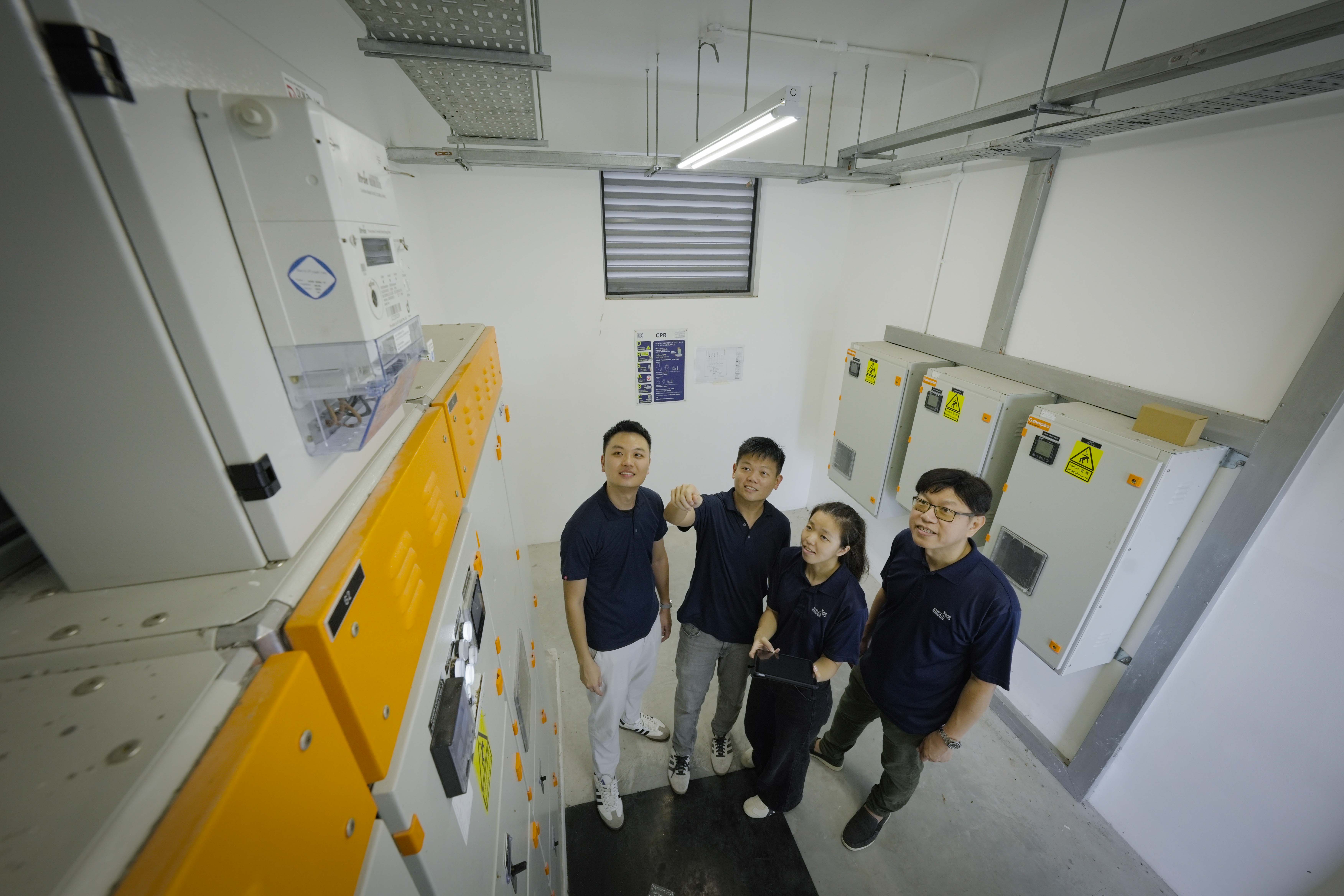
Gary (second from left) and team. Advanced Metering Infrastructure meters installed at each building collects data which will then be processed to provide actionable insights.
Lastly, another DSTA team also worked closely with the RSAF to design and deliver the automated Chinook Wash Shed, enabling a single operator to efficiently manage the entire washing process while conserving as much water as possible. Nozzles are strategically placed to cover previously hard-to-clean areas, and drainage channels sit under the aircraft to collect used water which would be treated for reuse. Sensors built in the system monitor water quality to automatically calibrate the chemicals required for the treatment process. Cleaning of sand filters (to remove debris from recycled water) is also automated to reduce pressure build up and minimise maintenance frequency.
“The design started with the idea of a one-touch mechanism, where personnel can simply press start and it will run through the entire pre-programmed wash cycle. Think of it like a carwash, where the process from wetting, soaping, spraying and rinsing is fully automated. Compared to a five-person team previously, manpower requirements have been reduced by 80%, freeing up personnel for more complex servicing work,” said Project Manager (RSAF Ammunition Facilities) Lim Wen Zhen from Building and Infrastructure Programme Centre.
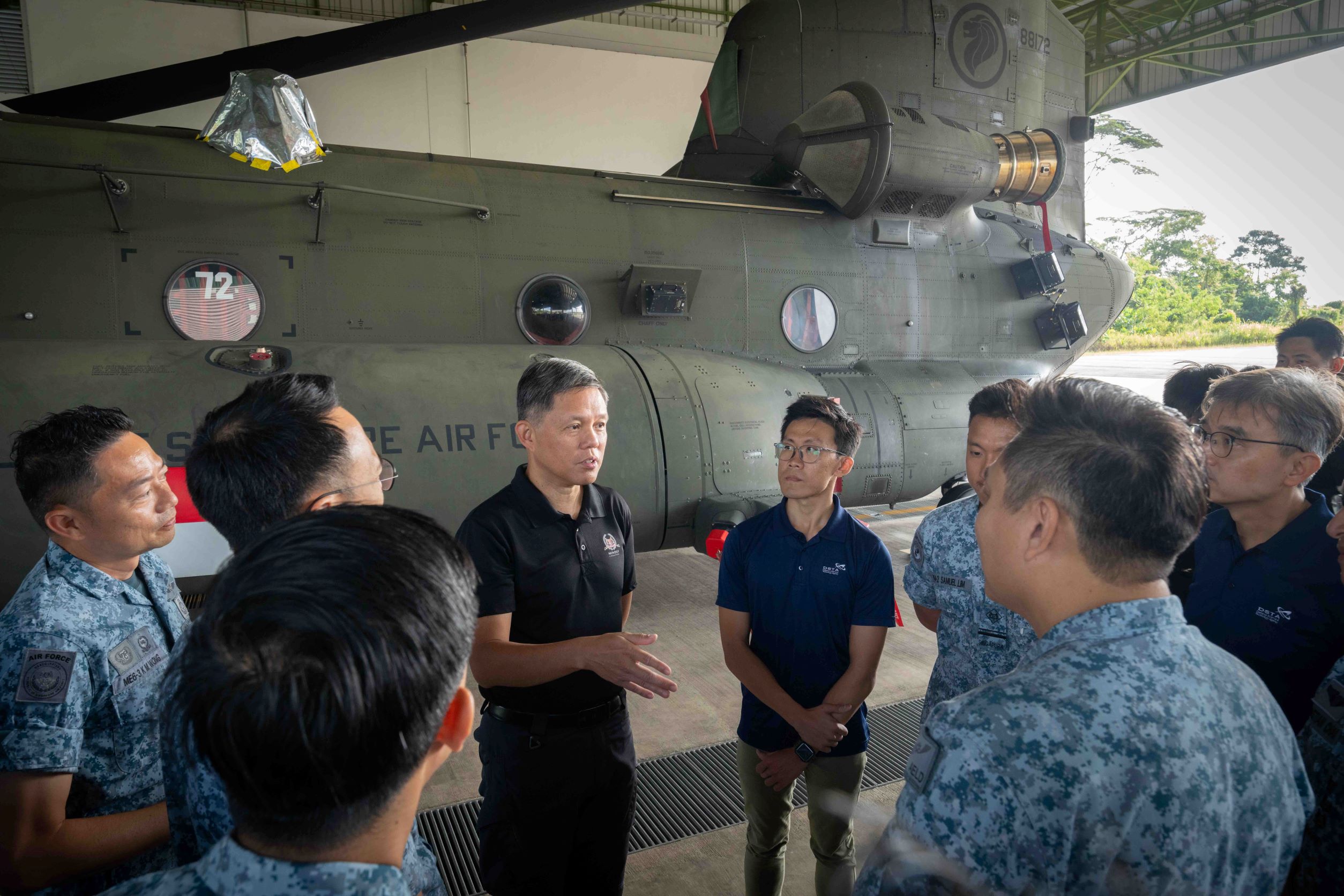
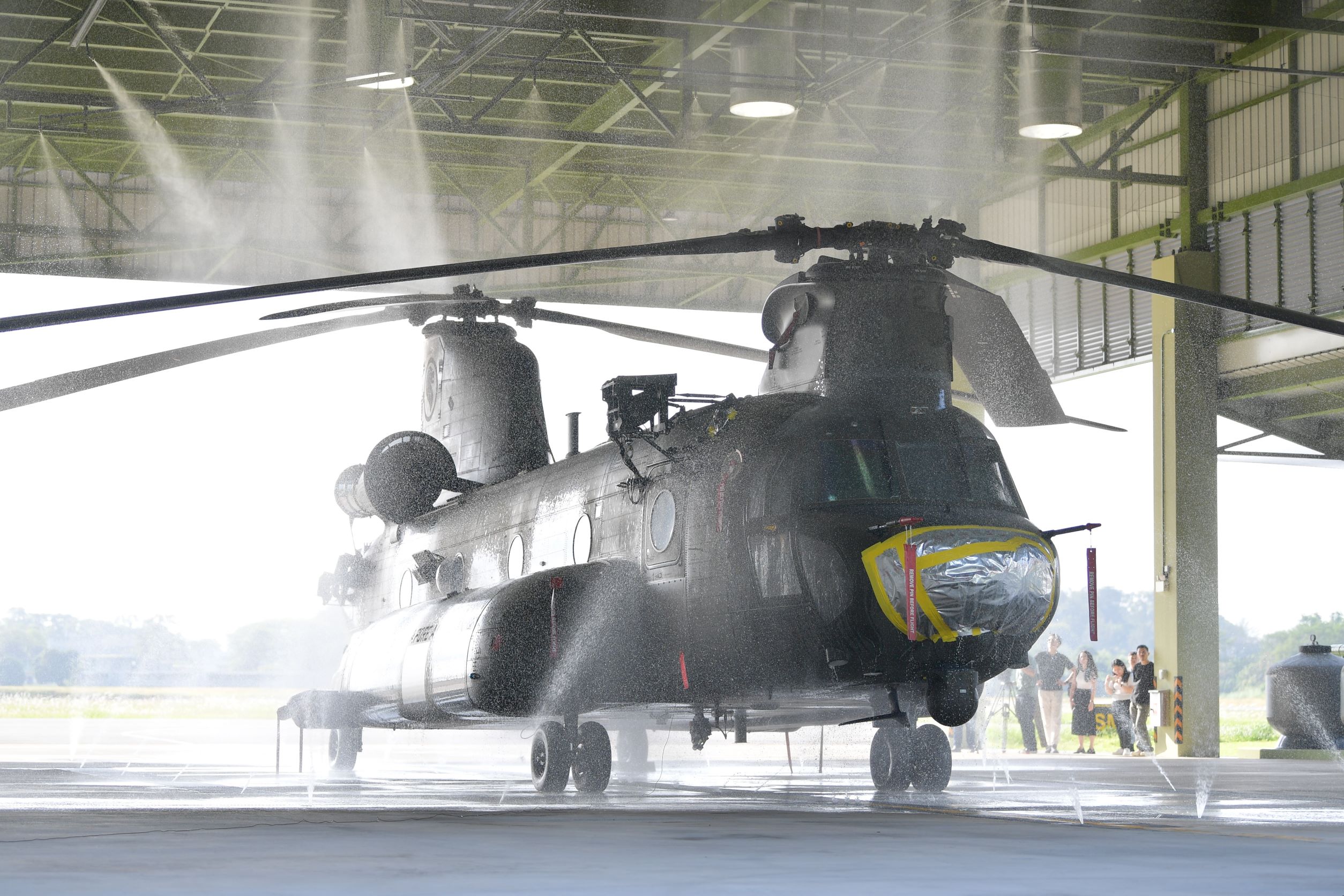
Left: Wen Zhen (third from right) and team interacting with Minister Chan (center) during the demonstration of the Chinook Wash Shed.
Right: The wash shed allows for more comprehensive and thorough cleaning of hard-to-reach areas of the Chinook.