
BACK
TO TOP
27 Oct 2026
In DSTA, our engineers don’t develop solutions in a closed lab – they live the mission, understand users’ needs, and adapt technology in real time. To keep pace with the evolving nature of warfare, DSTA constantly looks ahead as missions and unmanned threats evolve, and explores technology options early. Our engineers work closely with the Singapore Armed Forces (SAF) to turn ideas into practical, usable and field-ready capabilities.
At Exercise Wallaby (XWB) 2026 held in Rockhampton, Australia, DSTA and the SAF validated and operationalised new capabilities with the SAF that enables them to fight smarter, integrate better and stay future ready.
This included the unveiling of the Army’s Next Generation Infantry Battalion that will employ various unmanned systems and tactical drones to achieve complex mission outcomes. These were developed through live trials with soldiers in the field and robustly tested and integrated by DSTA to ensure that they meet a variety of mission needs in real-world environments.
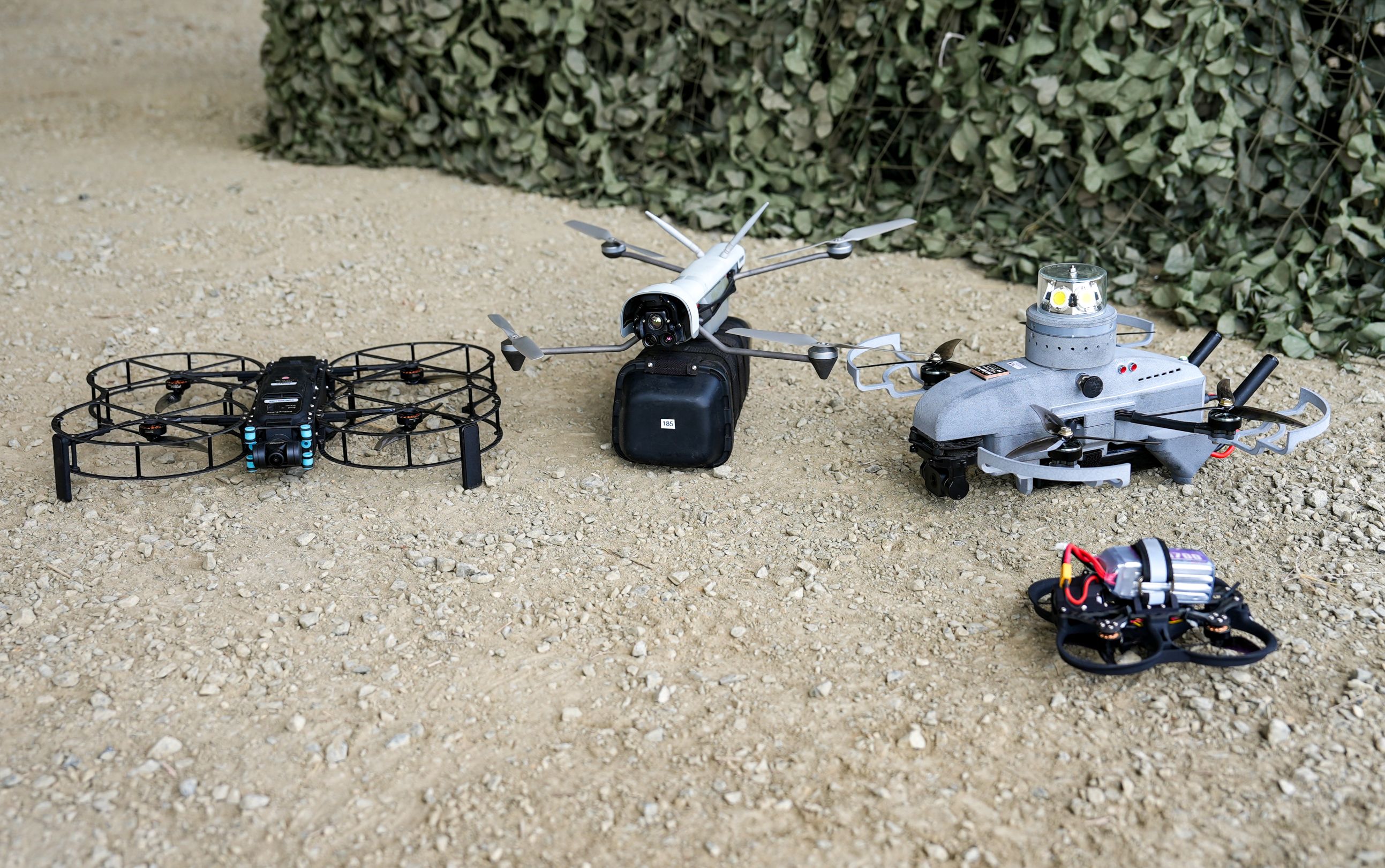
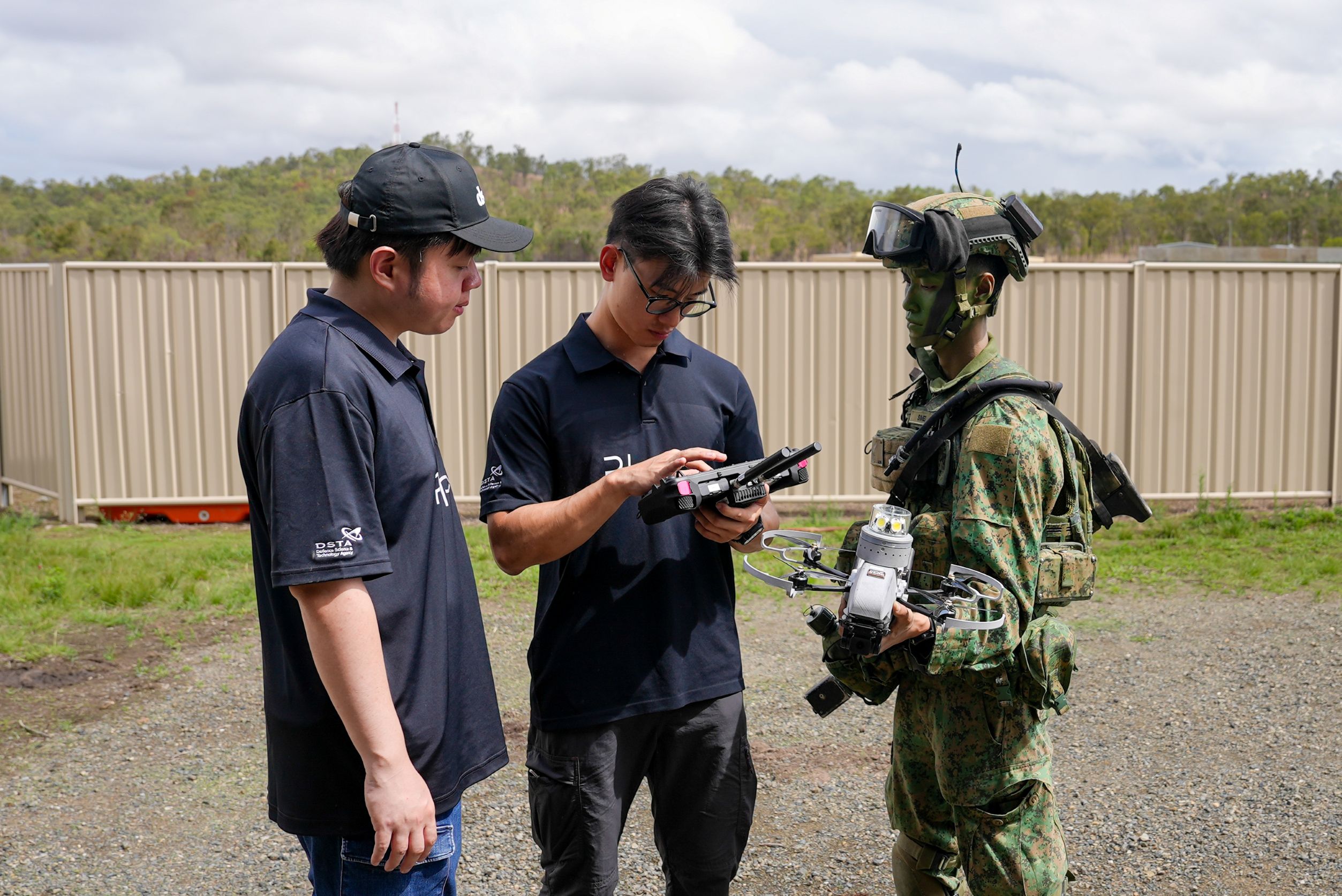
Our engineers worked closely with the Army to acquire and integrated a suite of different drones which are optimised for various roles.
“Beyond assessing how individual unmanned systems perform, it was important to connect everything together, so soldiers can operate different systems using a common controller and interface. The buttons are mapped such that they behave the same way, regardless of the model of drone being operated,” said Senior Programme Manager (Unmanned Systems) Kwek Qing Wei from Land Systems Programme Centre.
“We also created a training version of an operational drone so that the Army can safely and cost-effectively train with the same system during peacetime. The purpose was to build familiarity and confidence because soldiers train with the same systems that they may one day use in battle,” Qing Wei adds.
In addition, to enable coordinated operations, DSTA jointly developed the Soldier-level Battlefield Management System (also known as BMS (Soldier)) with the Army and ST Engineering. The application is built on a commercial mobile device that allows soldiers and commanders to see the same situational picture, enabling rapid planning of missions at the edge directly with troops on the ground.
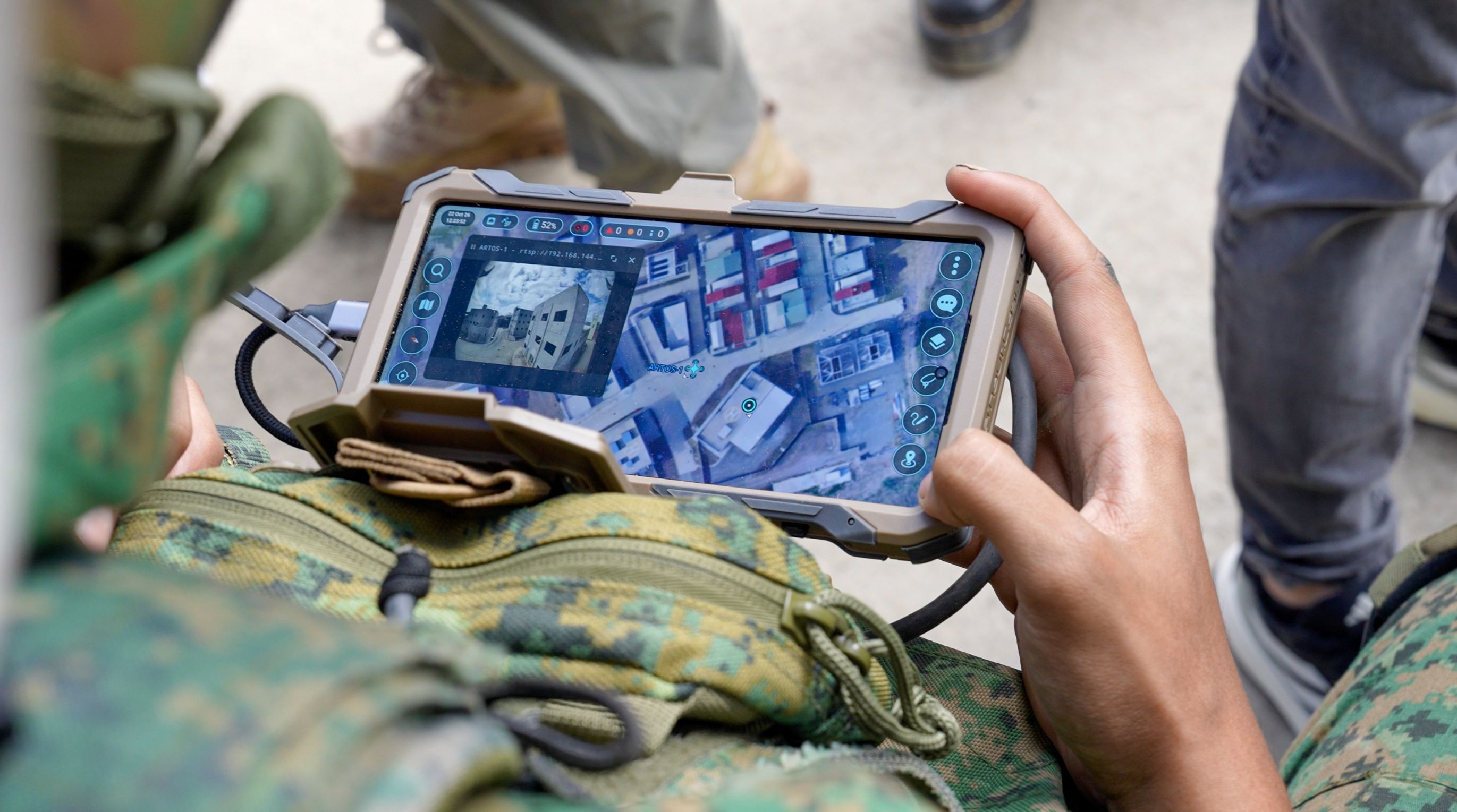
BMS (Soldier) allows sharing of critical information such as friendly and enemy forces at one’s fingertips, enabling timely decision making and planning at the edge where the mission is executed.
“We adopted an agile development approach with iterative software sprint cycles to refine the app with Army users. Testing this in the field with our end-users allowed us to experiment and gather feedback directly and immediately to ensure the app was fit for the soldier and fit for the mission,” said Senior Programme Manager (Soldier Systems) Collin Chng from Land Systems Programme Centre.
Our engineers also develop technologies as part of a wider, connected ecosystem. The Digitally Aided Close Air Support (DACAS) application for instance, was built on the foundations of the BMS(Soldier). This allows DSTA to reuse common software capabilities while tailoring the app for the Republic of Singapore Air Force (RSAF), who uses the app to share key information digitally between ground controllers and aircrew during Close Air Support missions.
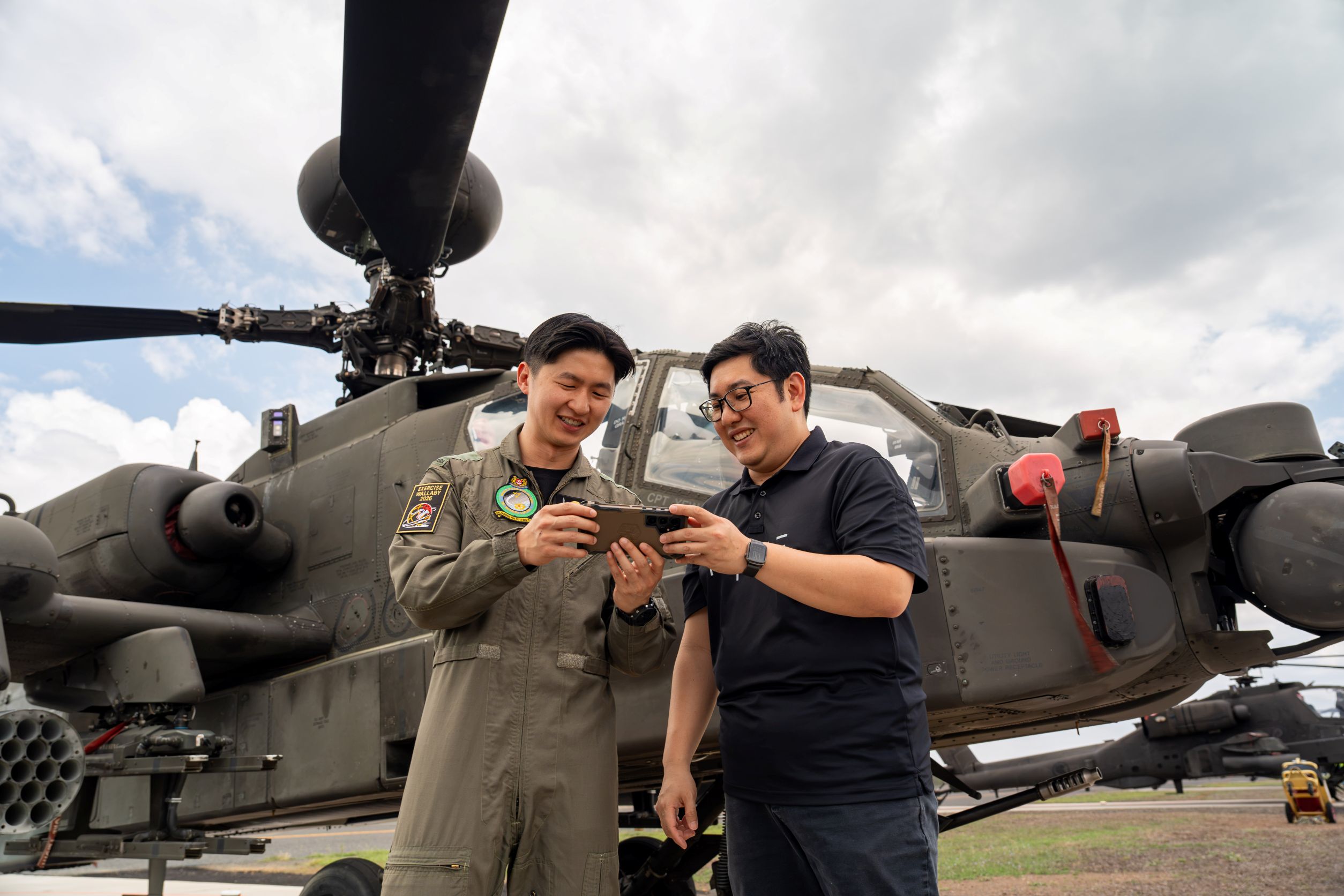
The DACAS app allows pilots and ground troops to see the same battlefield picture, turning critical information into simple visual cues that can be understood at a glance.
“Using a consistent software supports greater interoperability and information sharing across systems. We also adapted the app to use symbology that the users were already familiar with, reducing the need to learn a new set of symbols,” said Senior Programme Manager (Soldier C4/ISR) Adriel Chua from Land Systems Programme Centre.
DSTA continues to partner the SAF and industry partners from around the world to explore and innovate with emerging technologies as operational requirements constantly evolve. Among these experimentations are the Aerial Communications Node (ACN) that explores how commercial 5G technology can be applied to military missions, extending connectivity where terrain or other factors makes communications challenging or impossible.
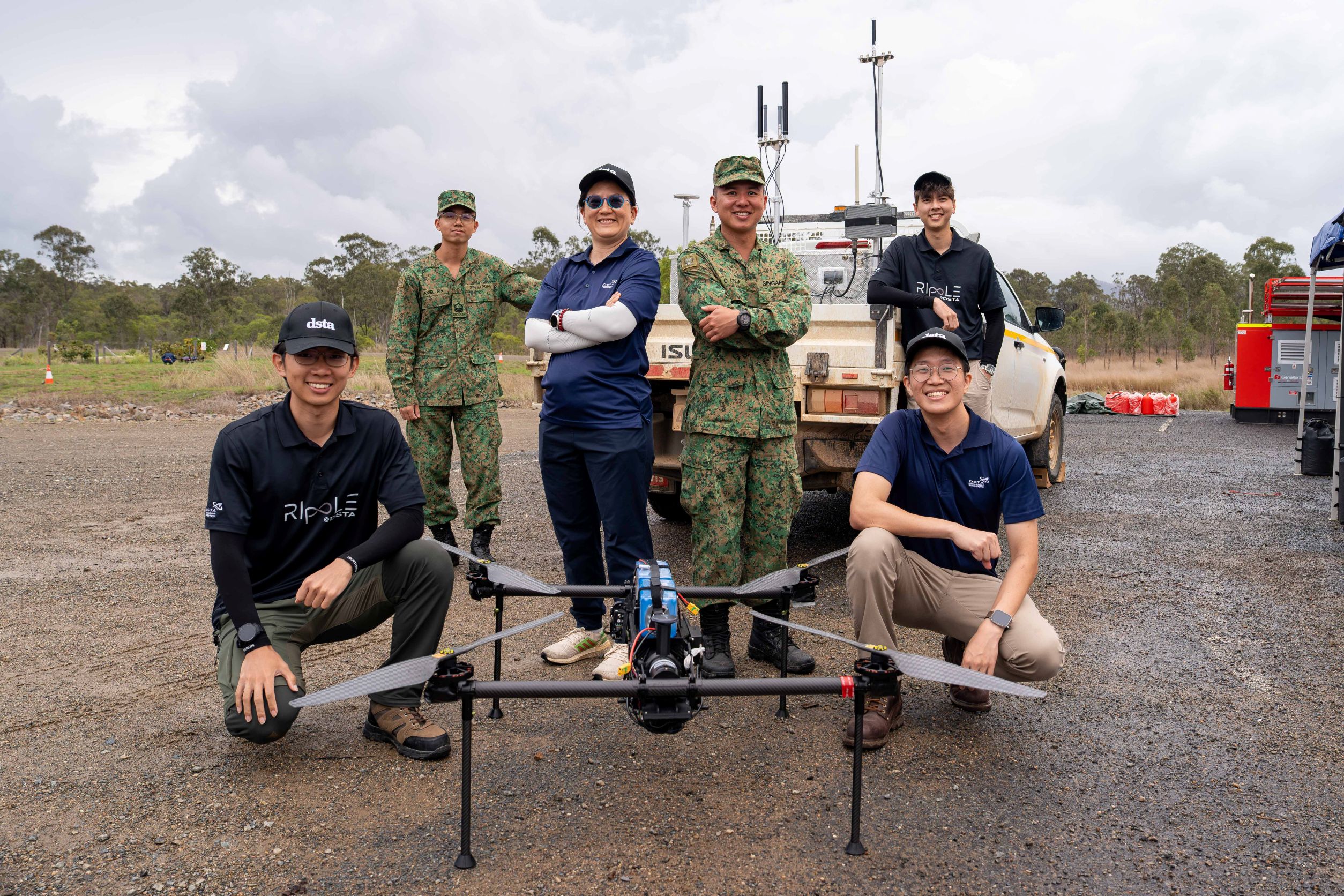
The team conducted on-the-ground trials to gather data, assess system performance and refine capabilities to prepare for the next paradigm of warfare.
“As the overall systems integrator, DSTA also brought together a range of sensors and effectors and rapidly integrated them through in-house developed Drone Defence C3 system into a single mobile Counter Unmanned Aerial Systems (CUAS) suite,” said Director (Technology Development) Ho Cheeng Tse from C3 Development.
“We designed the system to be modular, so that different sensors and effectors can be integrated depending on the operational needs and environment. Its mobile configuration allows it to be mounted on a variety of vehicles, giving the SAF flexibility in how the capability can be deployed,” adds Senior Engineer Chee Zhong Sheng from Advanced Systems Programme Centre.
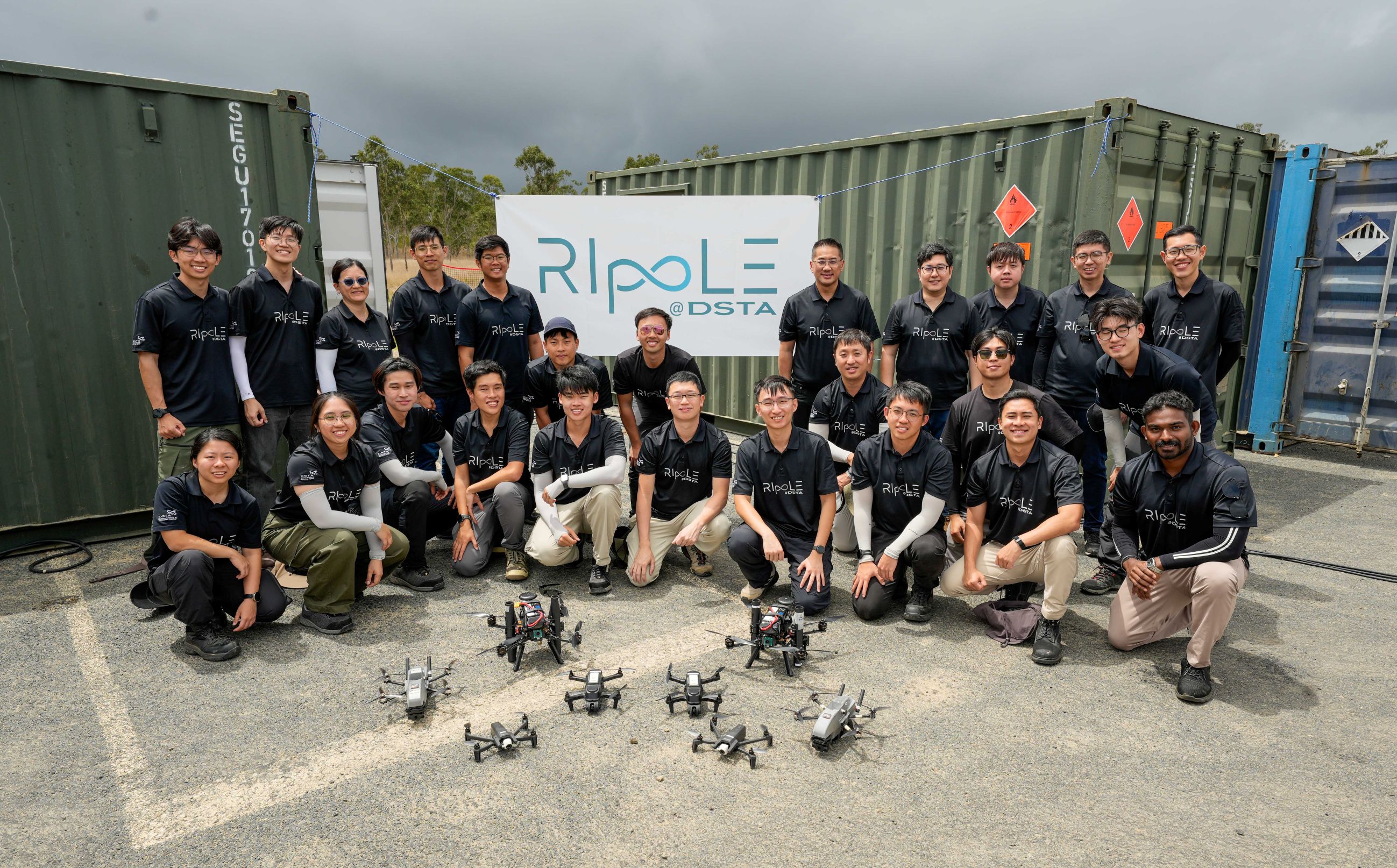
Chief Executive Roy Chan (second row, fifth from right) with DSTA engineers embedded in field trials at XWB 2026.