
BACK
TO TOP
09 Apr 2026
Today’s environment is changing more rapidly than before, with technologies shaping the battlefield. To stay ahead, DSTA is working closely with the SAF to bring tech innovations faster than ever. On 9 April, Prime Minister (PM) and Minister for Finance Mr Lawrence Wong visited the 6th Singapore Division/Headquarters Sense & Strike (6 Div/HQ SS) of the Singapore Army. DSTA has been partnering the 6 Div/HQ SS in emerging, disruptive and low-cost tech, enabling the SAF to see more, decide faster and act effectively in the field.
The visit comprised a drone showcase that demonstrated of the SAF’s integration of sense and strike capabilities and cross service integration efforts. Using the DSTA-developed Robotics Command, Control and Communications (RC3) system, a single operator is able to control a fleet of swarm Intelligence, Surveillance and Reconnaissance (ISR) drones to provide near-real time situational awareness across complex urban terrain.
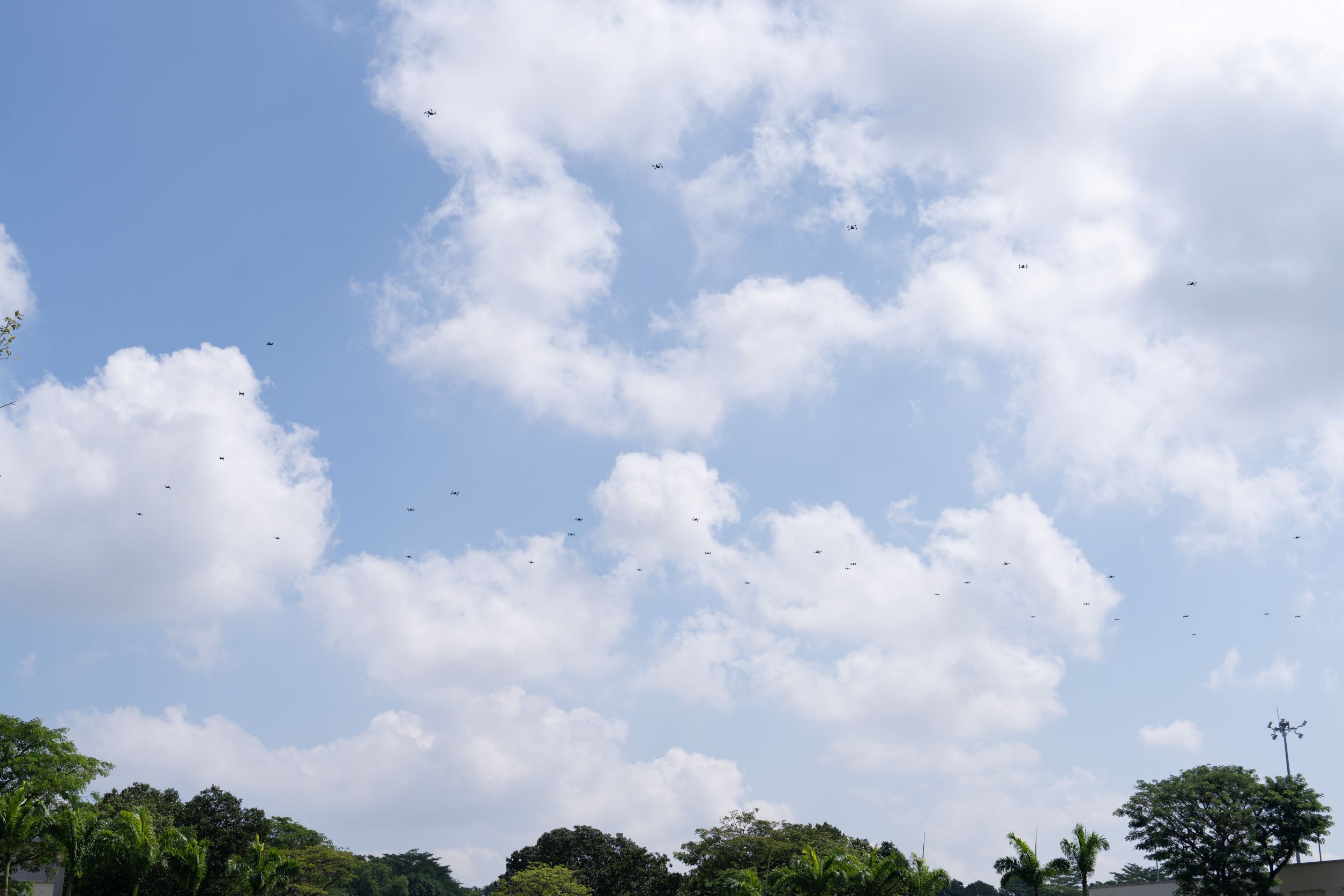
A coordinated swarm of drones controlled by a single operator for 3D mapping and surveillance.
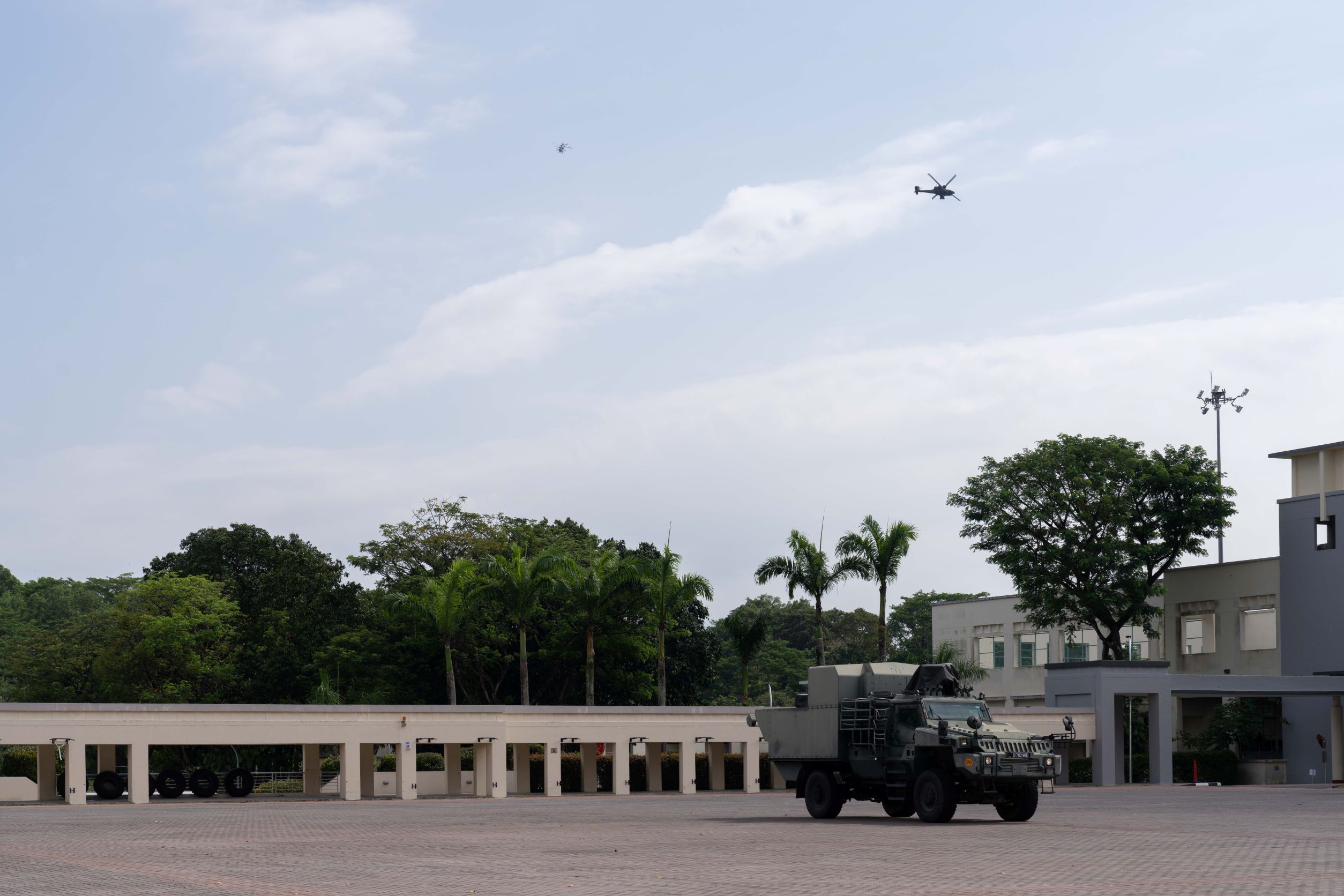
Through the application of Artificial Intelligence and Computer Vision, data gathered from drone feeds is integrated and translated into actionable targets, allowing a range of precision strike assets such as the SAF’s High Mobility Artillery Rocket System (HIMARS), fighter jets and AH-64D Apache attack helicopters to engage rapidly and in a coordinated manner.
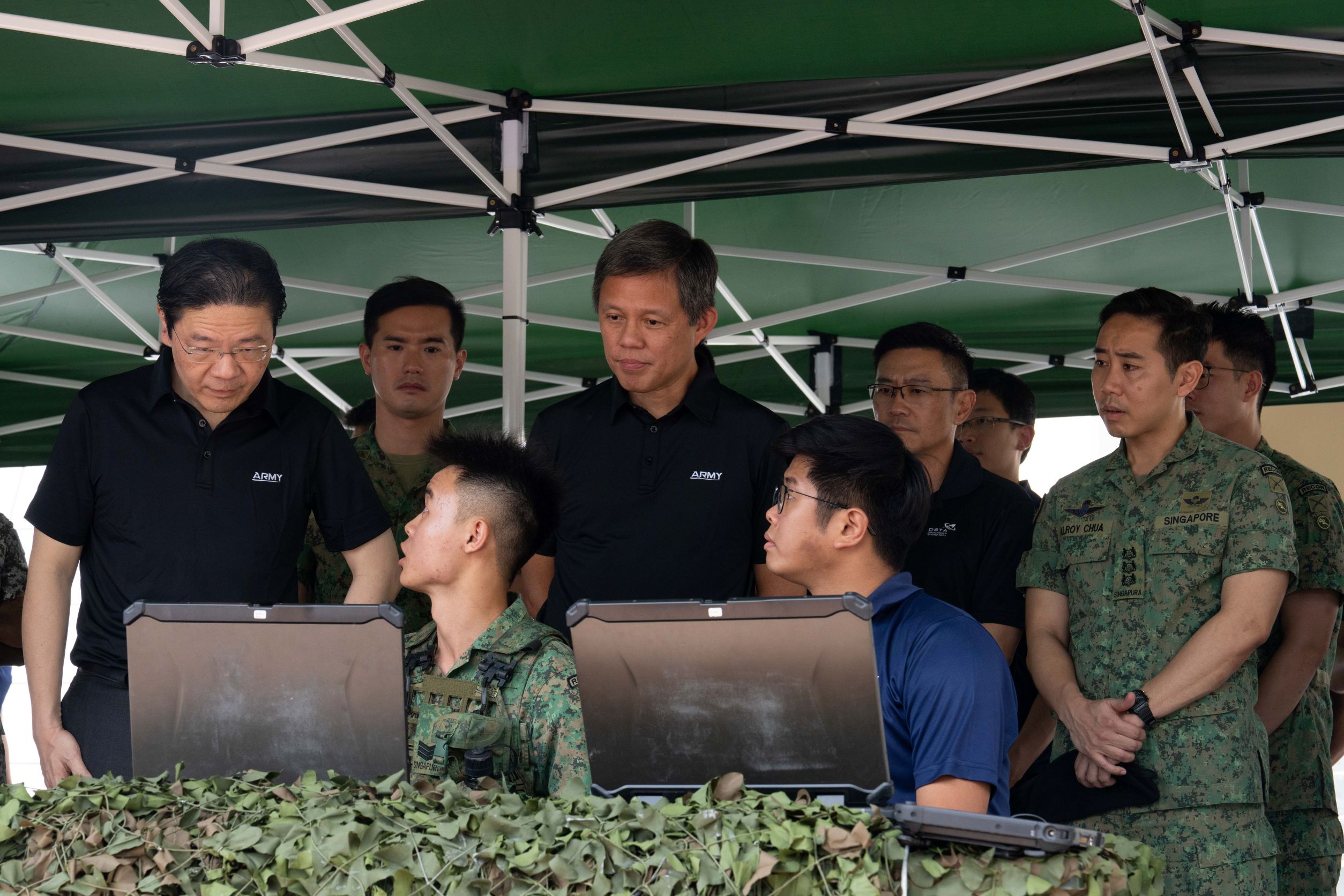
Left: (Standing, second and third from left): PM Wong and Defence Minister Chan Chun Sing being briefed by the SAF and DSTA team on how tactical 3D maps are generated based on the drone feeds.
Right: An AH-64D Apache attack helicopter and HIMARS conducting a simulated strike on a target using intelligence provided by drone swarms.
The RC3 allows for a unified and intuitive interface to control a plethora of unmanned systems, ranging from drones, ground robots and unmanned surface vessels (USVs). It also incorporates a variety of smart modules that allow soldiers to plan smarter and control multiple robots, and adopts an open architecture for the rapid integration of unmanned systems. This enables coordination to be seamless and training to be made simpler. The common unified C3 system also allows us to integrate new unmanned systems without significant retraining efforts, or additional equipment for soldiers.
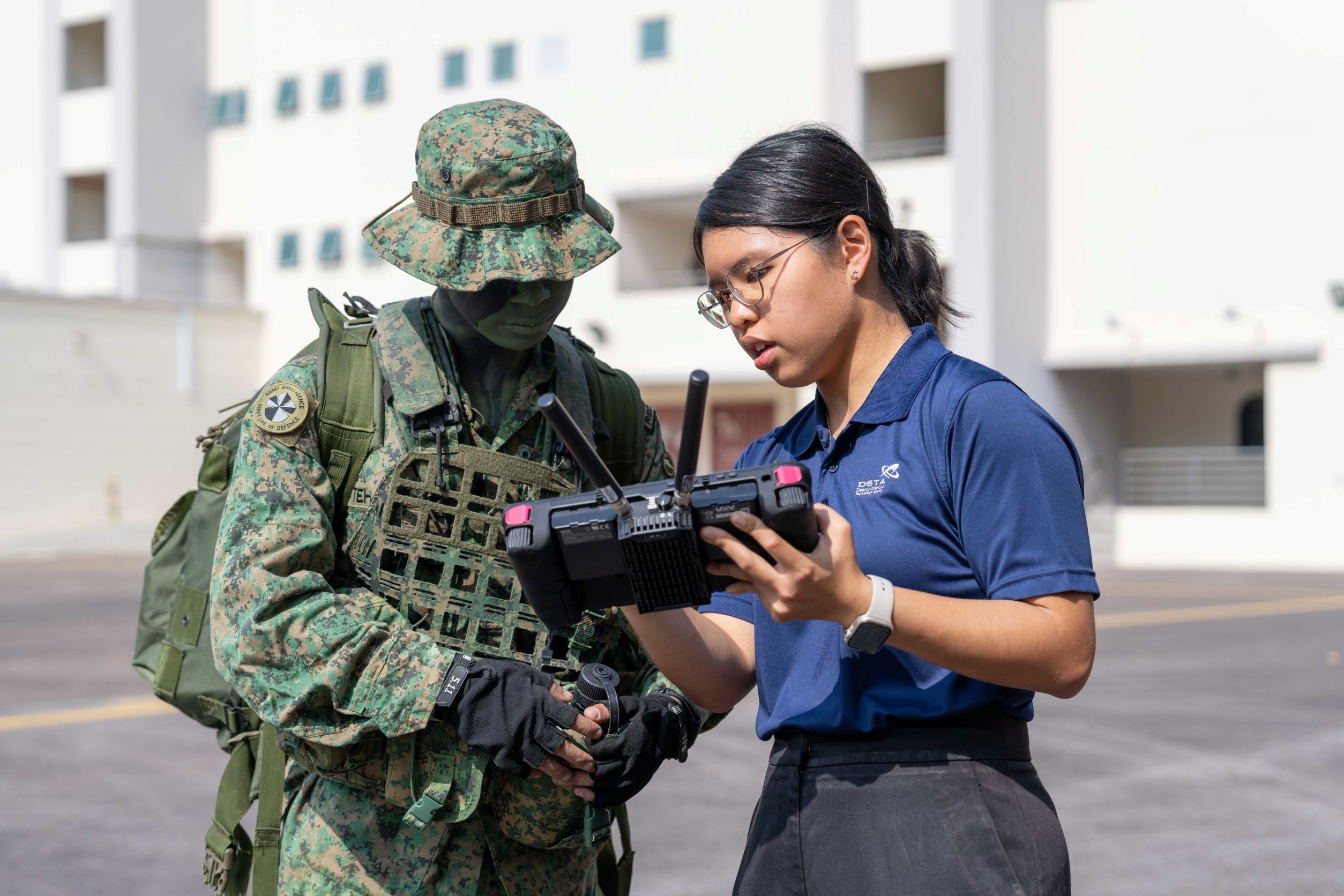
“Our engineers don’t just develop systems – we collaborate very closely with the SAF in the field to co-develop, test and iterate solutions in operational environments. This close ops-tech partnership shortens the path from concept to capability. Through continuous improvement, we integrate new ideas and various technologies, rapidly transforming them into operational capabilities,” shares Director Land Systems Alex Lee.
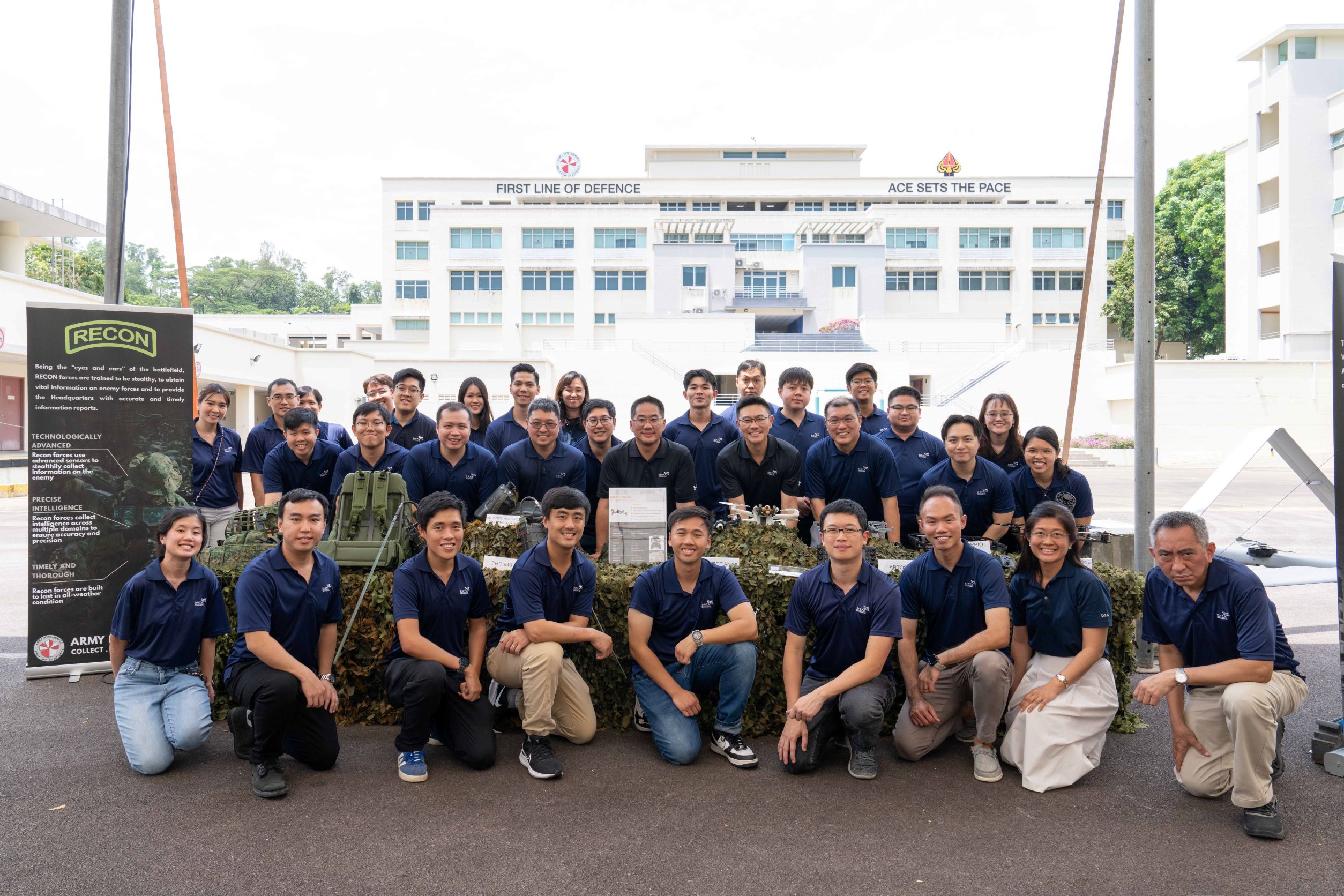
(Second row, fifth and sixth from left) Deputy Chief Executive (Operations) Roy Chan and Director Land Systems Alex Lee with DSTA team members at the event.
“We also keep a close watch on emerging technologies such as drones, robotics, AI and counter-drones, and collaborate widely with different partners – from defence primes to startups, to access frontier capabilities and bring them to the SAF quickly,” Alex adds.